Share this article
22 Jan 2025
Germany is one of the world's top exporters of NCAA student-athletes, historically sending elite talent across the Atlantic in sports like tennis, soccer, swimming, and basketball. However, a new wave of German athletes is aiming for the ice. If you want to secure an ice hockey scholarship USA German pathway, you need to understand that the recruitment pipeline for hockey is highly specialized and unlike any other collegiate sport.
To play ice hockey USA German style means adapting to a system where talent is scouted years in advance. At StudyNSport, we have spent over 15 years helping international athletes navigate this highly competitive environment, guiding over 600 athletes to successful US placements.
The Realistic Path for a German Ice Hockey Player
Unlike soccer or track and field, where athletes often transition directly from a European club to a college campus, ice hockey has a unique developmental step: North American junior hockey.
For a German player, the jump from the DNL (Deutsche Nachwuchsliga) or senior leagues directly to the NCAA is rare. US college coaches prefer to scout players who have already acclimated to the smaller North American ice surface, the physical style of play, and the English-speaking locker room.
Your realistic path to a college roster typically looks like this:
Evaluation and Profile Building: Showcasing your skills through a professionally edited video. Learn more in our highlight video guide.
Junior Hockey Placement: Spending 1 to 2 seasons in a top-tier North American junior league.
NCAA Commitment: Catching the eye of college scouts while playing junior hockey and signing your commitment letter.
The Junior League Stepping Stone
To get on the radar for a Germany ice hockey NCAA roster, you must target the leagues that college coaches watch every weekend. The primary junior leagues include:
USHL (United States Hockey League): The only Tier 1 junior league in the US. It is the premier producer of NCAA Division 1 talent.
NAHL (North American Hockey League): A Tier 2 league known for its intense, physical style and excellent NCAA commitment rates.
BCHL (British Columbia Hockey League): A Canadian junior league that sends dozens of players to NCAA Division 1 schools every year.
Playing in these leagues allows you to maintain your NCAA amateur eligibility while gaining exposure to hundreds of college scouts who attend league showcases.
Understanding the US College Hockey Landscape
US collegiate hockey is highly concentrated. There are approximately 60 men's NCAA Division 1 programs and around 40 women's Division 1 programs. Because of the limited number of teams, competition for roster spots is fierce.
You can read more about how this system works in our guide to NCAA Division 1.
Division 1 vs. Division 3
While NCAA Division 1 offers athletic scholarships, do not overlook Division 3. D3 schools do not offer athletic-specific scholarships, but they provide extensive academic and institutional financial aid packages that frequently cover tuition, room, and board.
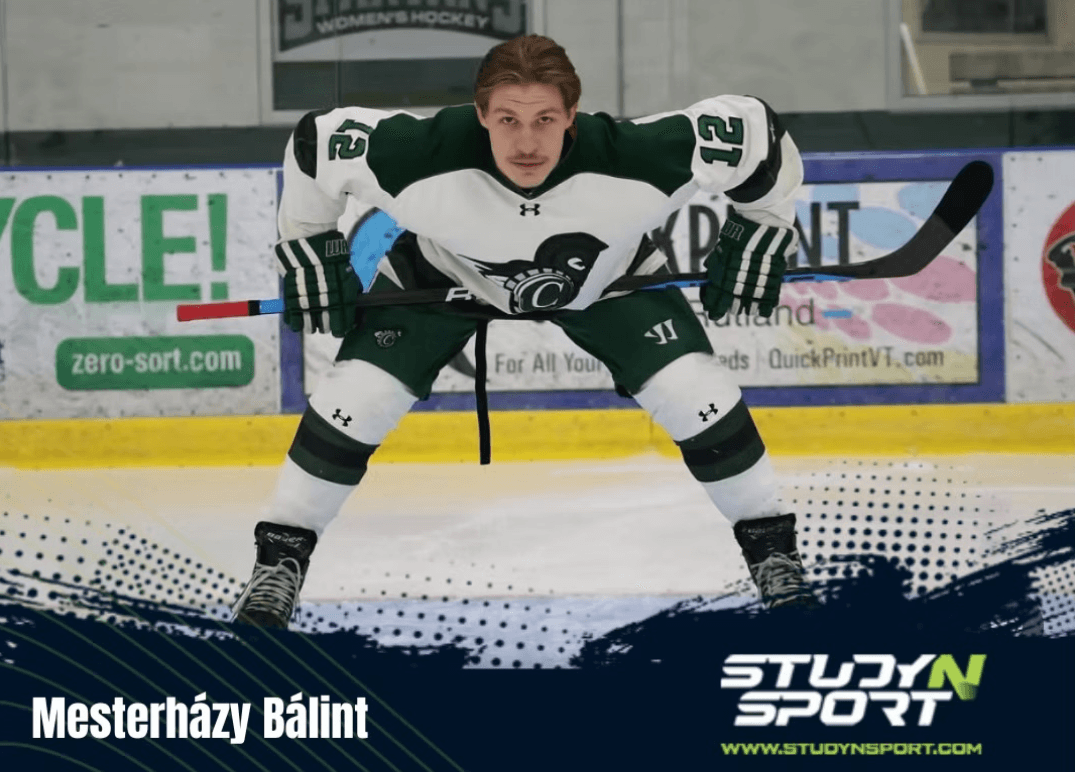
For European players, Division 3 offers an elite level of hockey combined with world-class academics. A prime example of this success pattern is Hungarian-born defenseman Erőss Zoltán, who successfully transitioned to Curry College, a highly competitive NCAA Division 3 program. His journey proves that European determination and tactical intelligence are highly valued by coaches in these prestigious conferences.
Academic and Athletic Requirements for German Players
To qualify for an ice hockey scholarship USA German student-athletes must meet strict academic standards set by the NCAA Eligibility Center.
Academic Records and the Abitur
The German school system is highly respected by US university admissions offices. Whether you have your Abitur or Fachabitur, your grades will be converted into a US GPA. A higher GPA not only makes you eligible to play but also opens the door to academic aid, which can supplement your athletic funding.
Standardized Tests
You will need to demonstrate English proficiency. US universities accept several exams:
TOEFL (Test of English as a Foreign Language)
IELTS or Duolingo English Test
Some highly academic institutions may also require the SAT
Athletic Level
Coaches look for players who can handle the speed and physicality of the North American game. If you are a defenseman, you must demonstrate quick transition play and physical presence. If you are a forward, coaches want to see explosive skating, hockey IQ, and the ability to play in high-pressure situations.
How StudyNSport Builds Your Pathway
Navigating junior league drafts, NCAA eligibility, and visa paperwork on your own is incredibly complex. Since 2010, StudyNSport has provided a structured, step-by-step process to take you from your local German club to a US ice rink.
Foundation Phase: We evaluate your current athletic and academic standing, build your profile, and help you compile a professional highlight reel. We also map out your exam strategy for the TOEFL or SAT.
Negotiation Phase: We directly contact junior league and college coaches on your behalf. We analyze roster needs, present your profile to our network, and help you evaluate offers to ensure you land in a program where you will actually get ice time.
Enrollment Phase: Once you commit, we handle the complex NCAA Eligibility Center registration, translate your German transcripts, and prepare you for your F-1 student visa interview.
Explore our dedicated German athlete portal or read more about our overall ice hockey recruiting services to see how we tailor this process for European players.
Your Sport is Your Passport
Playing college hockey in the United States is more than just a step toward a professional career; it is a life-changing academic and cultural experience. You will play in front of thousands of fans in state-of-the-art campus arenas, travel across the country, and earn a degree that sets you up for life after the game.
Do not leave your recruiting process to chance. The timeline for hockey is long, and the best rosters fill up quickly.
Next Steps
Ready to find out if you have what it takes to play college hockey in the USA?
Get evaluated for a scholarship to assess your athletic and academic eligibility.
Book a free consultation with our recruitment experts to discuss your options.
See our placed athletes to read about other European players who made their American dream a reality.
We want to get to know you better